
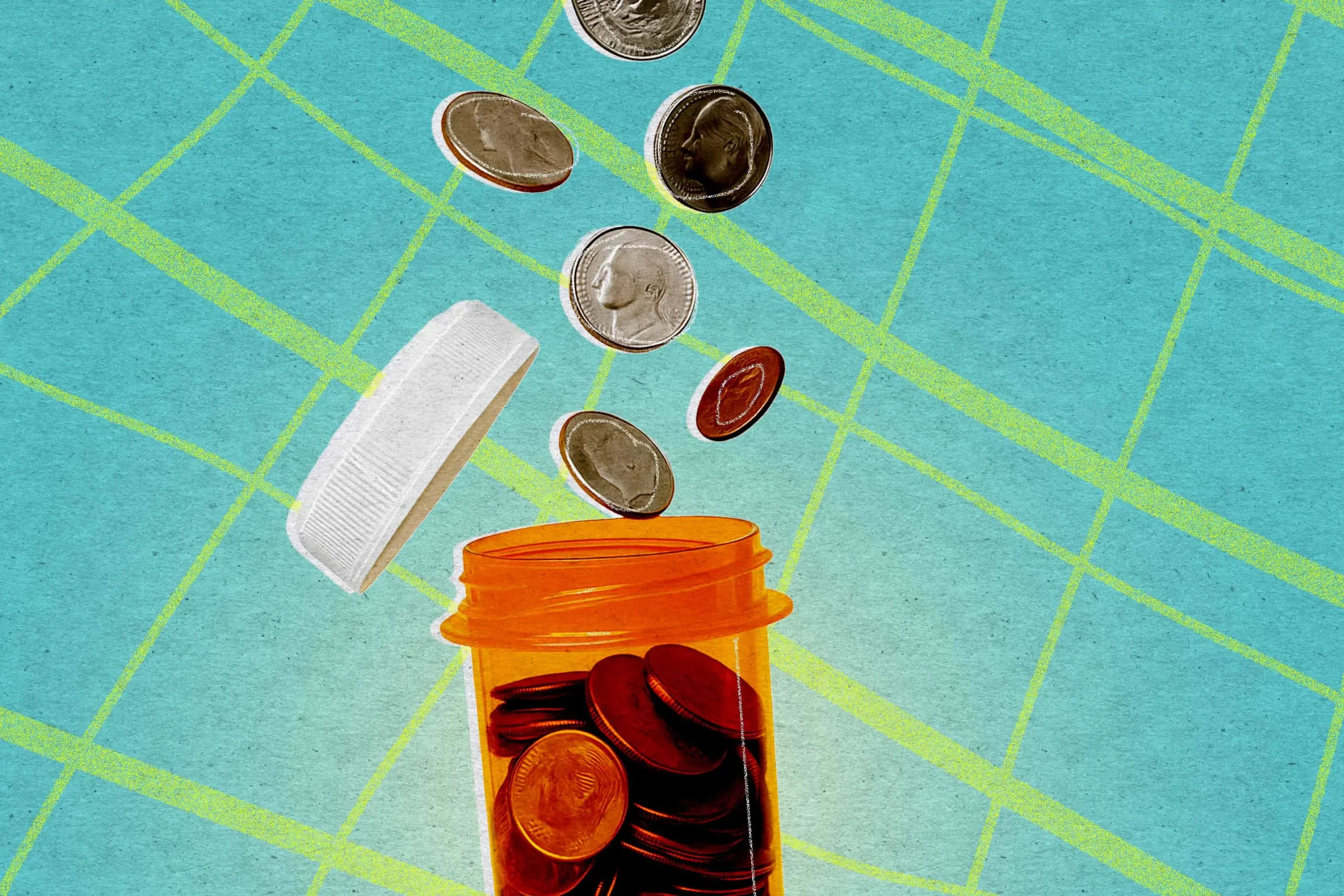
While health savings accounts have great potential to help Americans prepare for future health care expenses, a high percentage of account holders are not investing their HSA funds — and it’s robbing some folks of thousands (or more) over time.
HSA accounts, available as companion savings vehicles for people with high-deductible health plans, are widely used by Americans due primarily to their “triple tax advantage.”
HSAs can be funded with pre-tax dollars through payroll deferrals or via tax-deductible deposits. Contributions grow tax-free, and qualified withdrawals are not taxed. This combination of tax advantages can make an HSA even more powerful than a 401(k) because withdrawals from those retirement accounts are usually taxed as income. However, the contribution limit on an HSA ($4,300 per year for an individual) is much lower.

Don’t forget to invest HSA funds
Fewer than one in six account holders invest their HSA funds, according to a new report from the Employee Benefit Research Institute, or EBRI, which analyzed a database of more than 14 million accounts.
Why is the share so low? To start, some employers do not offer HSA investing features. But that’s not the entirety of the problem. After all, more than 64% of a surveyed group of employers had HSA investment options in a 2024 survey by the Plan Sponsor Council of America.
The EBRI report explains that “the ability to invest assets within the account” is “one of the largest advantages HSAs offer.” That’s why the institute is concerned that in 2023 “only 15% of account holders invested their HSAs in assets other than cash.”
The statistic could be an indication that a large swath of people aren’t investing their HSA funds simply because they’re not aware that they can do so. (Typically, contributions can be invested in mutual funds, brokerage accounts or certificates of deposit.)
Other people likely know it’s an option but are hesitant about subjecting their medical savings to market volatility.
Anticipating near-term health expenses? That could be a decent rationale for keeping HSA money in cash.
Still, investing some of your HSA funds in assets remains an option in these scenarios. “If account holders have a large enough buffer in liquid accounts to weather a large, unexpected health care expense, then they could be better off at retirement by investing some portion of their HSAs,” the report said.
How to use an HSA to save
Even though the name “health savings account” implies you’d generally want to use your funds to pay for health expenses, that’s not always the wisest move, according to the EBRI report. The data shows that many account holders are withdrawing funds to pay for medical expenses on an annual basis. Many of these people would be better off paying out-of-pocket, letting their HSA money continue to grow tax-free.
That approach may sound counterintuitive to many people, so additional education about optimal HSA strategies is needed, the EBRI report said. For example, people may not know that once you reach age 65, non-medical withdrawals don’t incur the 20% penalties. At that point, withdrawals are simply taxed as income. And unlike flexible spending accounts (FSAs), there’s no annual deadline to use HSA dollars.
It’s also helpful that older account holders aren’t required to take minimum distributions by the IRS, so it’s up to you how to use your HSA money. Just keep in mind that to avoid penalties before age 65, funds must be used for qualifying medical or dental expenses including deductibles, copays, over-the-counter drugs and menstrual products.

More from Money:
What Is a Health Savings Account?
Best Health Savings Account (HSA) Providers
This Underutilized HSA Perk Can Supercharge Your Savings
Our team conducts thorough research on all the brands listed on our website and may receive a fee from our partners. Our research and financial considerations may influence how these brands are displayed. Please note that not all brands are included on our website. To learn more about our process, please visit our website.
While health savings accounts (HSAs) have the potential to help Americans prepare for future healthcare expenses, a high percentage of account holders are not taking advantage of the investment options available to them. This is causing them to miss out on potential earnings of thousands of dollars over time.
HSAs are companion savings vehicles for individuals with high-deductible health plans and are popular due to their “triple tax advantage.” Contributions to HSAs can be made with pre-tax dollars through payroll deferrals or tax-deductible deposits. These contributions grow tax-free and qualified withdrawals are not taxed. This makes HSAs even more powerful than 401(k)s, as withdrawals from retirement accounts are typically taxed as income. However, the contribution limit for HSAs is much lower at $4,300 per year for individuals.
It is concerning that fewer than one in six HSA account holders are investing their funds, according to a report from the Employee Benefit Research Institute (EBRI). This report analyzed a database of over 14 million accounts and found that the low percentage of investors is not solely due to employers not offering HSA investing options. In fact, a survey by the Plan Sponsor Council of America found that over 64% of employers offer HSA investment options.
The EBRI report highlights that the ability to invest HSA funds is one of the biggest advantages of these accounts. Therefore, the fact that only 15% of account holders invested their funds in assets other than cash in 2023 is concerning. This could be due to a lack of awareness about the option to invest, or a hesitation to subject medical savings to market volatility. However, even if individuals anticipate near-term health expenses, it may still be beneficial to invest a portion of their HSA funds. The report suggests that if individuals have enough money in liquid accounts to cover unexpected health expenses, they could potentially benefit from investing some of their HSA funds for retirement.
Despite the name “health savings account,” it may not always be the best decision to use these funds to pay for medical expenses. The data shows that many account holders are withdrawing funds annually to cover healthcare costs, when they may be better off paying out-of-pocket and allowing their HSA funds to continue growing. For more information on how to use an HSA to save, please visit our website.
Source:Read More