
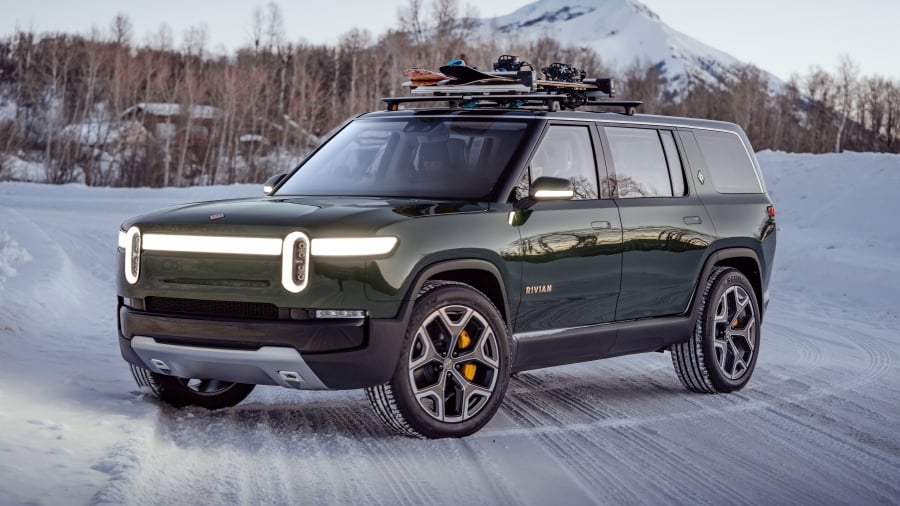
Source: Davit Kirakosyan
Introduction
California-based electric vehicle (EV) manufacturer Rivian Automotive (NASDAQ:RIVN) recently released its third-quarter results, which revealed its revenue fell short of analysts’ expectations. Nevertheless, the company demonstrated significant strides in cost reduction and achieving production targets. This news comes at a crucial time when the global automotive market is witnessing a paradigm shift towards electric vehicles, fueled by concerns over environmental sustainability and advancements in battery technologies.
Financial Performance
Rivian reported a Q3 revenue of $874 million, which was lower than the anticipated $1.01 billion. Additionally, it posted an adjusted loss per share of -$1.08, which was wider than the forecasted -$0.95. This shortfall might be attributed to various factors, including growing market competition, supply chain disruptions, and the ongoing global chip shortage that has severely impacted the entire automotive industry. However, it’s important to note that these results are part of Rivian’s journey as a relatively young player in the EV market, where initial capital-intensive investments are often offset by long-term gains.
Production and Delivery
Despite the financial shortfalls, Rivian appears to be making steady progress on the production front. The company delivered 10,018 vehicles and produced 13,157 at its Illinois facility in the third quarter, reflecting consistent production momentum. This is an encouraging sign for investors, as it showcases the company’s ability to maintain production levels amidst challenging market conditions.
Aiming for Positive Gross Profit
Rivian’s investors have been largely optimistic, buoyed by the company’s focus on achieving a positive gross profit by Q4 2024. This optimism is backed by Rivian’s progress in maximizing revenue per unit, reducing variable costs, and improving fixed-cost efficiency. The company also reaffirmed its full-year delivery goal of 50,500 to 52,000 vehicles, which bolsters investor confidence in Rivian’s ability to meet its targets.
Cost Reduction and Technological Advancements
Rivian CEO RJ Scaringe highlighted the company’s advancements in reducing the Gen 2 R1 cost structure. This is primarily supported by new vehicle technologies and an optimized manufacturing process that not only reduces costs but also improves efficiency and vehicle performance. As a result, Rivian is strategically positioning itself to capture a larger market share in the fiercely competitive EV market.
Production Outlook and EBITDA Loss Forecast
However, the EV manufacturer has lowered its 2024 production outlook to 47,000-49,000 vehicles, attributing this adjustment to component shortages. This reflects a broader industry-wide challenge, as automakers around the world grapple with supply chain disruptions caused by the pandemic. Furthermore, Rivian has adjusted its annual adjusted EBITDA loss forecast to fall between $2.825 billion and $2.875 billion. This revision takes into account present market conditions and the company’s ongoing efforts to ramp up production and sales.
Conclusion
Despite missing revenue expectations in Q3, Rivian Automotive appears to be making steady strides in the right direction. With an emphasis on cost reduction, production efficiency, and technological innovation, the company is well-positioned to navigate the challenges of the EV market. As the world continues to shift towards more sustainable transportation options, Rivian’s progress will be closely watched by investors and industry experts alike.