
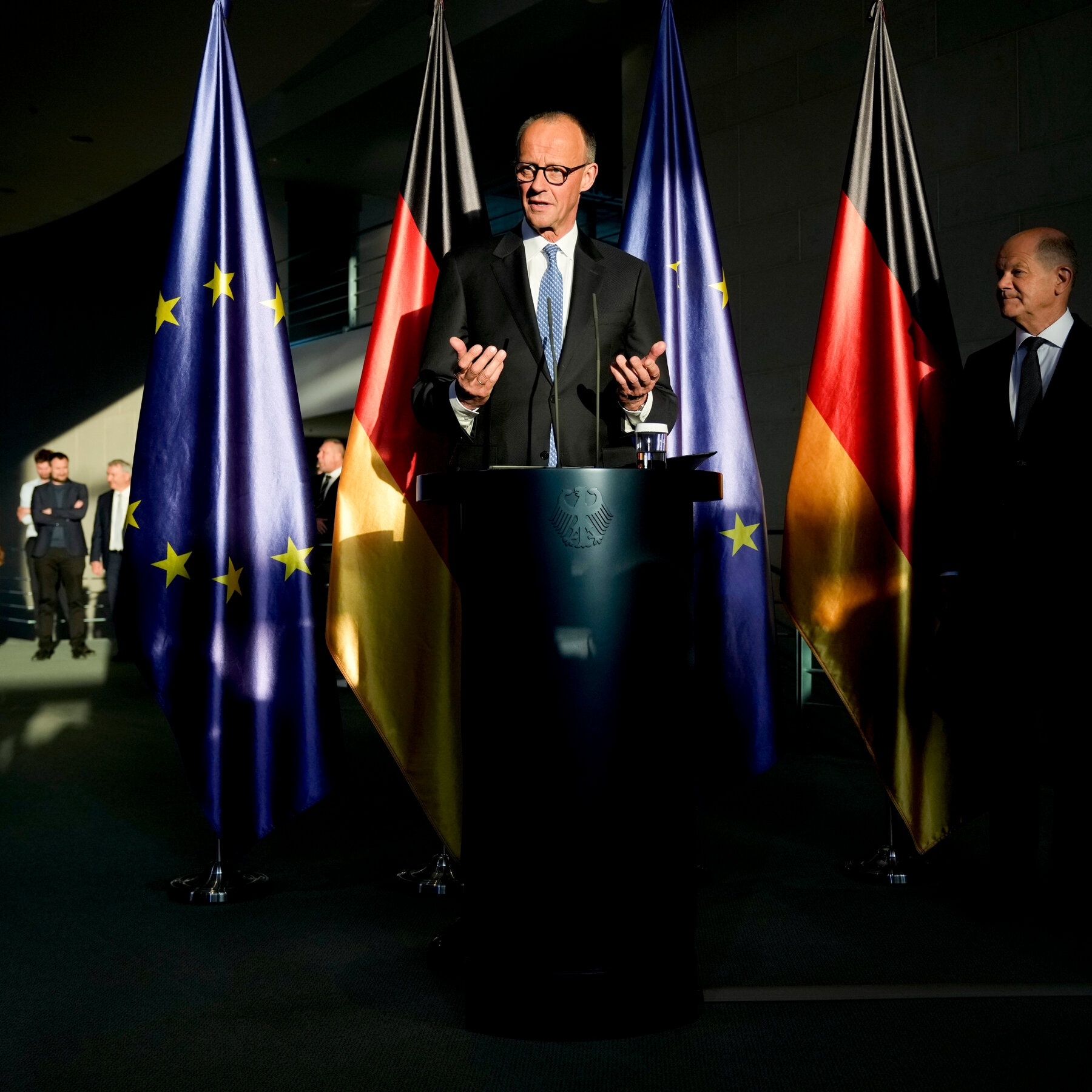
Friedrich Merz secured the top job but only after losing on his first attempt, a surprise that potentially weakens his government at a fraught time for Germany and EuropeThe top job in Germany was secured by Friedrich Merz, but not without a surprise twist that could potentially weaken his government during a critical time for both Germany and Europe. After losing on his first attempt, Merz was ultimately elected as the 10th postwar chancellor on Tuesday. This historic stumble may complicate his efforts to revive the nation’s struggling economy, tighten its borders, and rebuild its military. These tasks are especially important as Europe is currently in need of strong German leadership.
Merz had been the leader-in-waiting for 10 weeks following his party’s victory in February elections. However, he initially fell six votes short in the parliamentary vote for chancellor on Tuesday morning. This defeat was unprecedented in modern Germany’s history. The votes were conducted on secret ballots, leaving the reasons for the failure unclear. Some lawmakers speculated that a series of individual protest votes had accidentally added up to an embarrassing setback.
Merz, 69, was able to rebound and win on a second ballot in the afternoon. However, his credibility has been called into question by rival parties and outside analysts. Even his opponents on Germany’s far left and far right have stated that Merz has lost legitimacy. Political observers believe that this brief setback could make it more difficult for the new chancellor to project strength on the world stage and pass critical legislation to advance his agenda.
Merz had hoped for a clear vote of confidence in Parliament as he faces challenges such as President Trump’s tariff threats against Germany’s export-heavy economy, reversing the country’s economic downturn, and countering an aggressive Russia to the east. “Germany and Europe need to serve as anchors of stability in a volatile global environment,” said Cathryn Clüver Ashbrook, the senior vice president for Bertelsmann Stiftung, a nonpartisan foundation based in Gütersloh, Germany. However, the unexpected delay in Merz’s election “could signal rocky times ahead.”
Source:Read More