
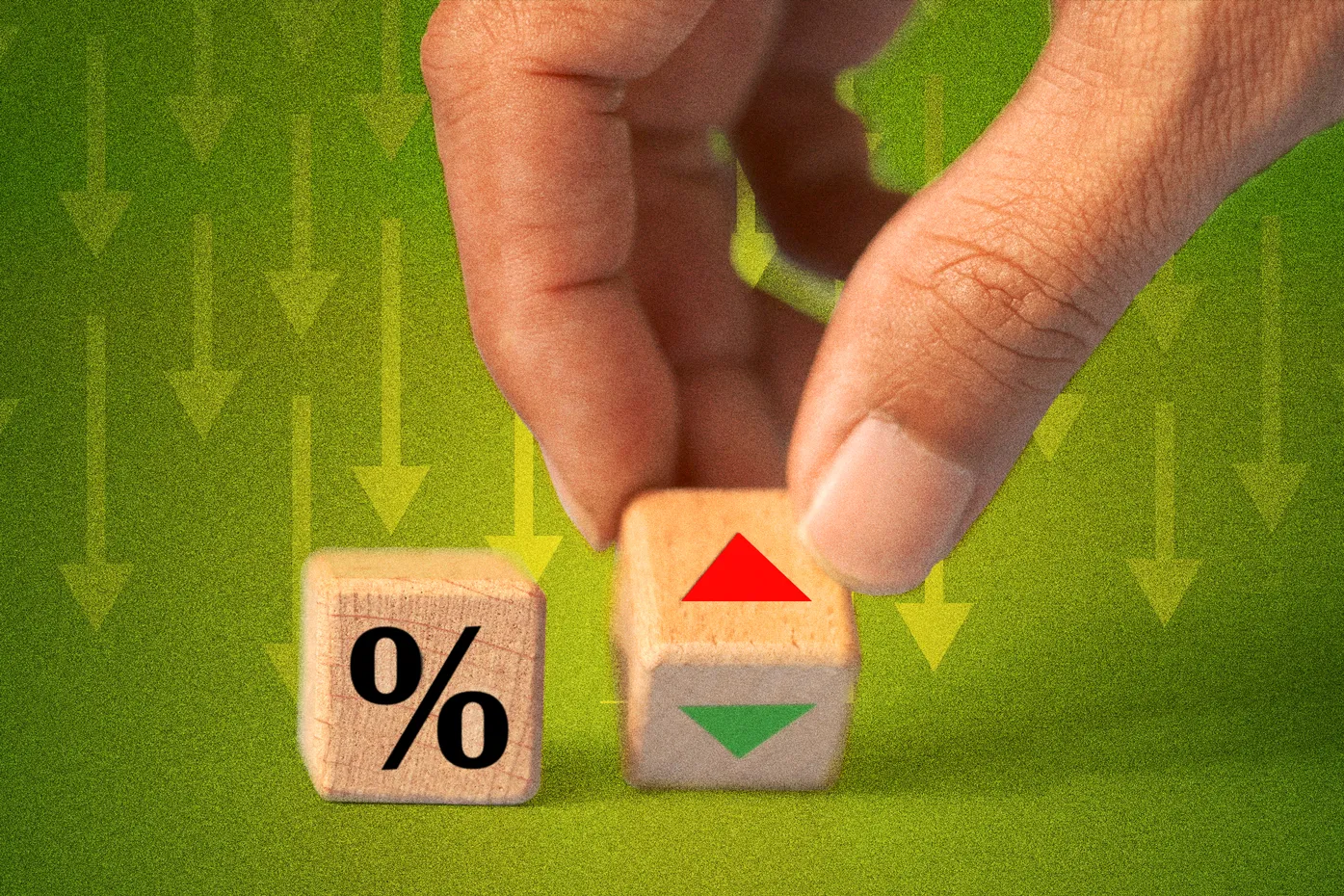

The Federal Reserve cut interest rates multiple times in 2025, lowering borrowing costs as inflation continued to cool from its post-pandemic highs. The central bank held rates steady at its January 2026 meeting, though policymakers have signaled that further cuts remain possible if economic growth slows and price pressures keep easing.
While it’s unclear how much the Fed will lower the benchmark effective federal funds rate this year, many economists expect at least modest cuts in 2026. Drops in interest rates significantly impact financial markets, but how will lower rates affect the price of gold?

How interest rates affect global markets
Interest rates dictate the cost of borrowing money. Lower rates make it easier for individuals and businesses to take out loans — which puts more money into the economy — and for companies to hire more people and make more investments with the extra cash. Lower interest rates also help consumers buy more products and services.
Increased consumption leads to inflation, as companies will raise their prices based on heightened demand. That’s good news for many investments, such as stocks, real estate and gold, since lower interest rates increase the value of each of these assets.
However, higher interest rates have the opposite effect: They reflect a contractionary monetary policy and reduce inflation. Interest rate hikes may become necessary if inflation runs out of control, as we saw in 2022. Higher rates discourage businesses from making investments and cause consumers to tighten their budgets.
What lower interest rates mean for gold
Lower interest rates are favorable for gold since they increase the money supply. More dollars chase fewer goods and services, causing currencies to lose their value. Gold retains its intrinsic value, which means investors need more dollars to buy the same asset.
Lower rates also raise asset prices. Inflation and the level of uncertainty are two driving forces that impact gold prices. While stocks and real estate have those factors as well, investors also have to consider factors like corporate earnings, property market valuations and other variables.
For some asset classes and individual investments, other issues can minimize the impact of lower interest rates. Meanwhile, gold is always positioned to gain value when interest rates decline.
Does gold always go up when interest rates go down?
In most cases, gold will gain value as interest rates drop. We saw that dynamic play out in 2025, when gold climbed sharply amid the Fed’s rate cuts and strong central bank demand.
However, lower rates are only one variable. While they can provide a tailwind for gold, lower inflation rates can act as a headwind that offset the gains from lower interest rates. Inflation has dropped significantly from its 2022 peak and has hovered closer to the Fed’s 2% target in recent months, though progress has been uneven.
Interestingly, gold remained flat in 2022 despite record inflation, which demonstrates that changes to interest rates and inflation can cancel each other out and minimize gold’s price movements.
Gold can also lose value if economic or geopolitical issues start to ease, as the precious metal is viewed as a safe-haven asset that provides investors with stability during uncertain times. However, the opposite is also true, as gold may underperform stocks and real estate during less tumultuous times.
Should investors buy gold?
Investing in gold can be a smart move for investors who want to hedge against inflation and diversify their portfolios. Many experts recommend having 5%–10% of your portfolio allocated to alternative assets, including gold.
Despite being considered safe-haven assets, precious metals still have risks. However, their lack of correlation with the stock market gives investors an advantage.
Gold gains can minimize the impact of a stock market correction. Furthermore, precious metals are poised to gain value as interest rates decline. Gold also appreciates each time the Fed decides to print more money, as devaluing paper currency results in comparative gains for the yellow metal.
Investing just 5%–10% of your portfolio in gold gives you the flexibility to pursue asset classes, like stocks and real estate, that can outperform precious metals during bull markets. The two aforementioned assets can also generate income via dividends and rental income, which becomes valuable cash flow that could eventually replace your income as you age.
Unlike many other assets, gold has withstood the test of time. It’s been a medium of exchange for thousands of years, and it’s an essential resource for many industries. It’s used in automobiles, smartphones, dentistry and other products and services. Society would have a difficult time functioning properly without gold.
Investors also have the option of opening a gold individual retirement account (or gold IRA) to capitalize on tax benefits. You can reduce your current tax bill with a traditional gold IRA or avoid taxes on capital gains with a Roth gold IRA. These can help you build a strong nest egg with alternative assets to complement your traditional retirement accounts by the time you retire.

More from Money:
Beginner’s Guide to Investing in Precious Metals
The Federal Reserve cut interest rates multiple times in 2025, lowering borrowing costs as inflation continued to cool from its post-pandemic highs. The central bank held rates steady at its January 2026 meeting, though policymakers have signaled that further cuts remain possible if economic growth slows and price pressures keep easing.
While it’s unclear how much the Fed will lower the benchmark effective federal funds rate this year, many economists expect at least modest cuts in 2026. Drops in interest rates significantly impact financial markets, but how will lower rates affect the price of gold?
How interest rates affect global markets
Interest rates dictate the cost of borrowing money. Lower rates make it easier for individuals and businesses to take out loans — which puts more money into the economy — and for companies to hire more people and make more investments with the extra cash. Lower interest rates also help consumers buy more products and services.
Increased consumption leads to inflation, as companies will raise their prices based on heightened demand. That’s good news for many investments, such as stocks, real estate and gold, since lower interest rates increase the value of each of these assets.
However, higher interest rates have the opposite effect: They reflect a contractionary monetary policy and reduce inflation. Interest rate hikes may become necessary if inflation runs out of control, as we saw in 2022. Higher rates discourage businesses from making investments and cause consumers to tighten their budgets.
What lower interest rates mean for gold
Lower interest rates are favorable for gold since they increase the money supply. More dollars chase fewer goods and services, causing currencies to lose their value. Gold retains its intrinsic value, which means investors need more dollars to buy the same asset.
Lower rates also raise asset prices. Inflation and the level of uncertainty are two driving forces that impact gold prices. While stocks and real estate have those factors as well, investors also have to consider factors like corporate earnings, property market valuations and other variables.
For some asset classes and individual investments, other issues can minimize the impact of lower interest rates. Meanwhile, gold is always positioned to gain value when interest rates decline.
Does gold always go up when interest rates go down?
In most cases, gold will gain value as interest rates drop. We saw that dynamic play out in 2025, when gold climbed sharply amid the Fed’s rate cuts and strong central bank demand.
However, lower rates are only one variable. While they can provide a tailwind for gold, lower inflation rates can act as a headwind that offset the gains from lower interest rates. Inflation has dropped significantly from its 2022 peak and has hovered closer to the Fed’s 2% target in recent months, though progress has been uneven.
Interestingly, gold remained flat in 2022 despite record inflation, whi
Source:Read More