
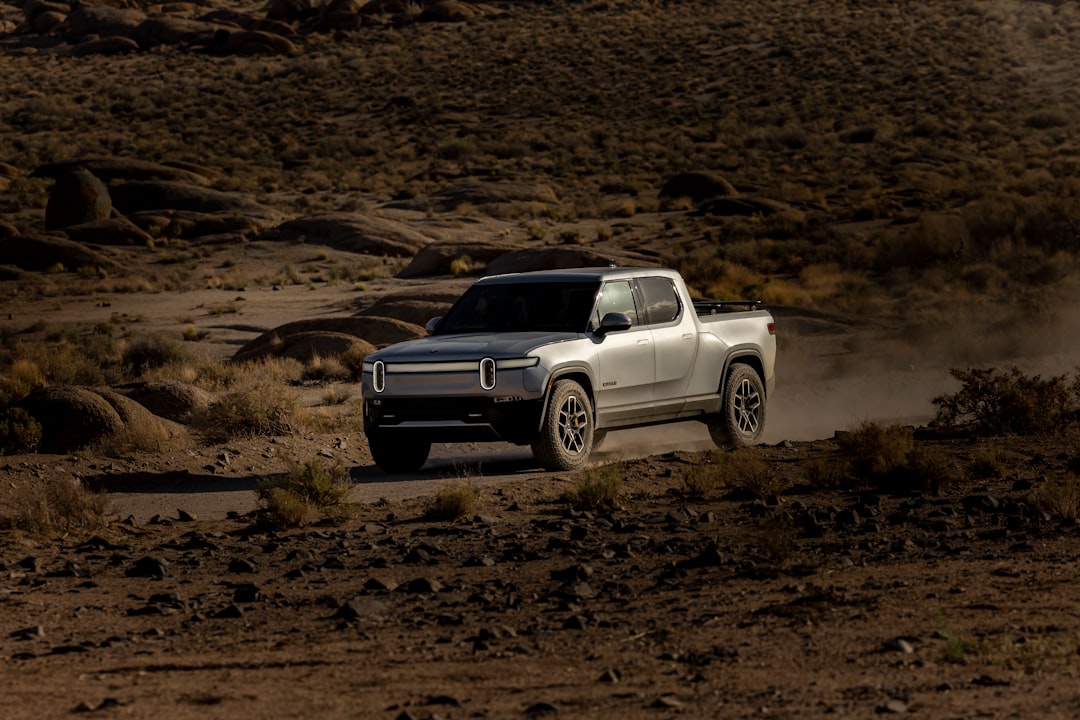
Source: davit kirakosyan
Rivian Automotive Shares Slip Amid Lower Than Expected Q4 Deliveries
Shares of Rivian Automotive (NASDAQ: RIVN) dipped nearly 2% intraday on Friday as investors reacted to the electric vehicle maker’s disappointing fourth-quarter delivery figures. The report indicated that Rivian’s performance had fallen short of Wall Street’s expectations, demonstrating a potential softening in the EV market.
The slowdown in Rivian’s delivery performance comes amid a broader context of challenges faced by automakers across the United States. The industry has been grappling with a decrease in demand for electric vehicles, a trend that has affected companies like Rivian significantly.
Impact of the Expired Federal EV Tax Credit
One of the major factors influencing this sluggish demand has been the expiration of a $7,500 federal EV tax credit at the end of September. This tax credit had effectively lowered purchase costs for consumers, encouraging more people to consider transitioning to electric vehicles. Its expiration, however, reversed this dynamic, increasing the effective purchase price for consumers and subsequently pressuring sales across the EV sector.
Rivian’s Delivery and Production Numbers Miss the Mark
Rivian reported that it had delivered 9,745 vehicles during the quarter, falling short of analyst expectations of approximately 10,050 units. The company’s production also didn’t meet expectations, with 10,974 vehicles produced at the company’s manufacturing facility in Normal, Illinois.
Reflecting on the company’s performance in 2025, Rivian delivered 42,247 vehicles after producing 42,284 units. Analysts had pegged their expectations at around 42,500 deliveries for the year, according to data from Visible Alpha. This implied an approximate 17.6% decline from the previous year’s performance. Despite this, Rivian expressed that its quarterly and full-year results were in line with internal expectations.
Rivian’s Strategy Amid Softer Demand
In response to the softer demand environment, Rivian has been implementing efficiency initiatives at its Illinois plant. These efforts are aimed at maintaining cost discipline, simplifying vehicle components, and reducing material and manufacturing costs. The company’s strategy is focused on narrowing losses without solely relying on higher production volumes.
Analysts Remain Optimistic About Rivian’s Future
Despite the recent setback, analysts remain broadly constructive on Rivian’s longer-term outlook. The optimism is largely centered on the planned launch of the R2 model in 2026. The R2, which is expected to be produced at the Normal facility, is anticipated to be priced around $45,000. This price point positions it in a more affordable segment of the EV market.
The R2 model is viewed as a potential catalyst for expanding Rivian’s customer base and supporting higher deliveries over time. This outlook persists even as near-term volumes face pressure from challenging pricing and demand conditions. The hope is that the introduction of the R2 model will help Rivian navigate the rough waters of the current EV market and steer the company towards a prosperous future.