
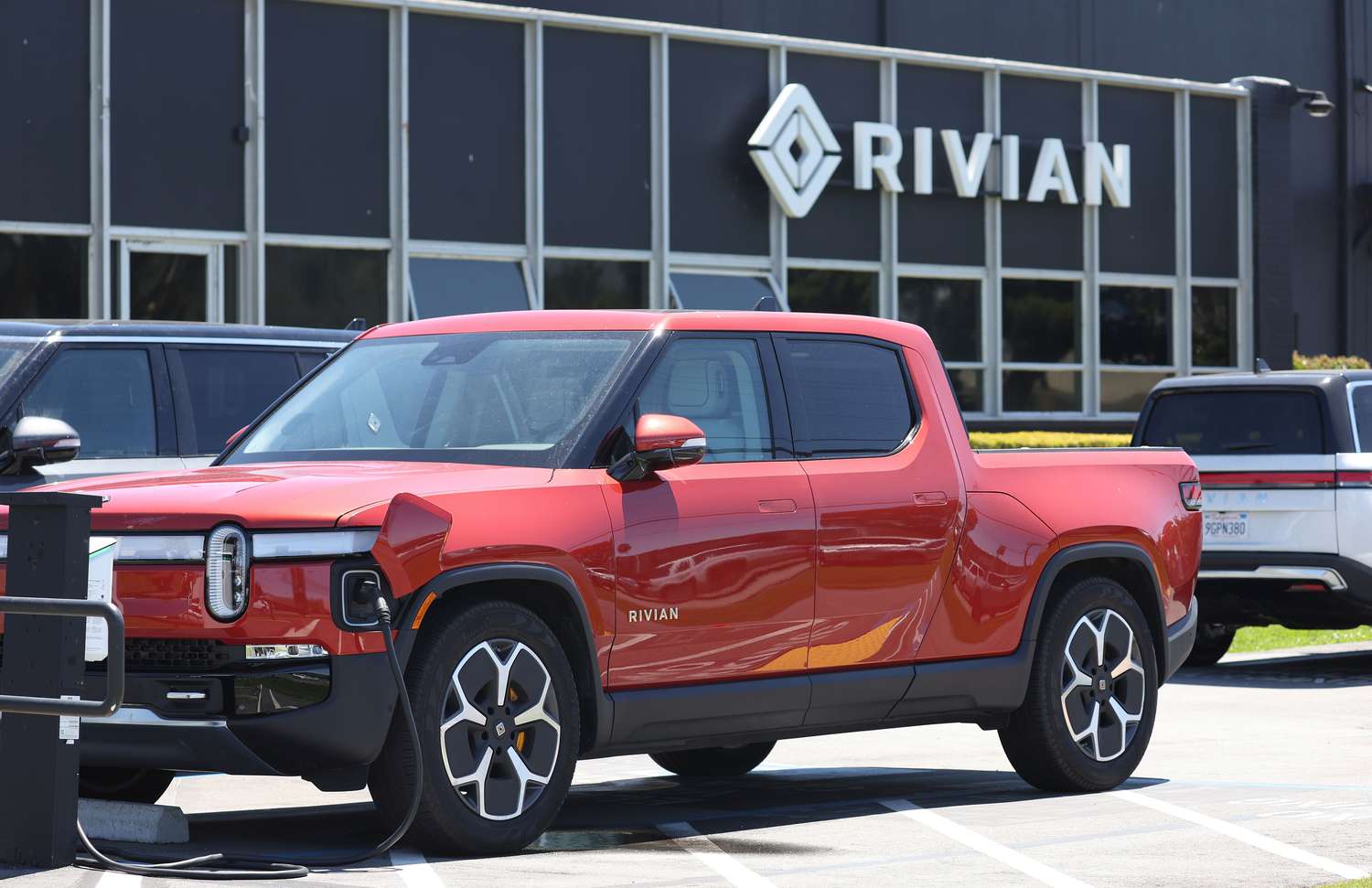
Source: Davit Kirakosyan
Rivian Automotive Shares Dip Amid Production Forecast Cut
Shares of Rivian Automotive (NASDAQ:RIVN), a leading player in the electric vehicle industry, fell over 3% on Friday. The drop followed the company’s announcement of a significant reduction in its full-year production forecast. This downward revision was attributed to a hefty disruption in the supply of a crucial component used across Rivian’s R1 and RCV platforms. The news adds to the growing list of challenges faced by electric vehicle manufacturers as they grapple with supply chain disruptions, fluctuating demand, and changing economic conditions.
Disrupted Supply Chain Impacting Production
Rivian now expects to produce between 47,000 and 49,000 vehicles this year, a considerable cut from the previous target of 57,000. The supply chain issue, which has reached a critical point in recent weeks, has severely affected the company’s production capabilities. This has happened despite Rivian’s successful manufacture of 13,157 vehicles and delivery of 10,018 in the third quarter. It’s clear that even as the company is managing to keep the production line moving, the supply chain disruption is having a profound impact on its ability to meet initial projections.
Rivian’s Delivery Outlook Amid Challenges
Despite the setback in production, Rivian holds a cautiously optimistic view about its delivery outlook. The company maintains expectations for a slight increase over last year, projecting a range of 50,500 to 52,000 vehicle deliveries. However, the revised guidance indicates that the company is on a path to produce fewer vehicles this year compared to 2023.
This optimistic outlook may be rooted in the company’s belief in the long-term viability and demand for electric vehicles, even while acknowledging the short-term challenges that the industry faces. It also suggests confidence in the company’s ability to overcome these issues and continue delivering high-quality electric vehicles to the market.
Impact of Rising Interest Rates and Inflation on the EV Market
The production setback comes amid broader challenges for the electric vehicle industry. Rising interest rates and inflation are pushing consumers toward more cost-effective alternatives. The escalating cost of owning an EV, combined with economic uncertainty, has somewhat dampened demand. This has led some potential buyers to opt for cheaper, conventional vehicles in the current market climate.
Given these economic conditions, consumers are becoming more price-conscious, and the cost advantage of traditional, combustion engine vehicles can be a significant draw. However, it is essential to remember that the shift toward electric vehicles is a long-term trend, driven by environmental concerns and advancements in technology. While short-term economic factors may create bumps in the road, they are unlikely to derail the overall shift toward electric vehicles.
Conclusion
The news about Rivian’s revised production forecast serves as a reminder of the complex challenges the electric vehicle industry is currently facing. From supply chain disruptions to economic headwinds, these issues are putting pressure on manufacturers and influencing consumer choices. However, it’s important to note that these challenges are likely short-term, and the long-term trajectory for electric vehicles remains robust and promising. Despite the setbacks, companies like Rivian continue to forge ahead, demonstrating resilience and adaptability in a rapidly evolving market landscape.