
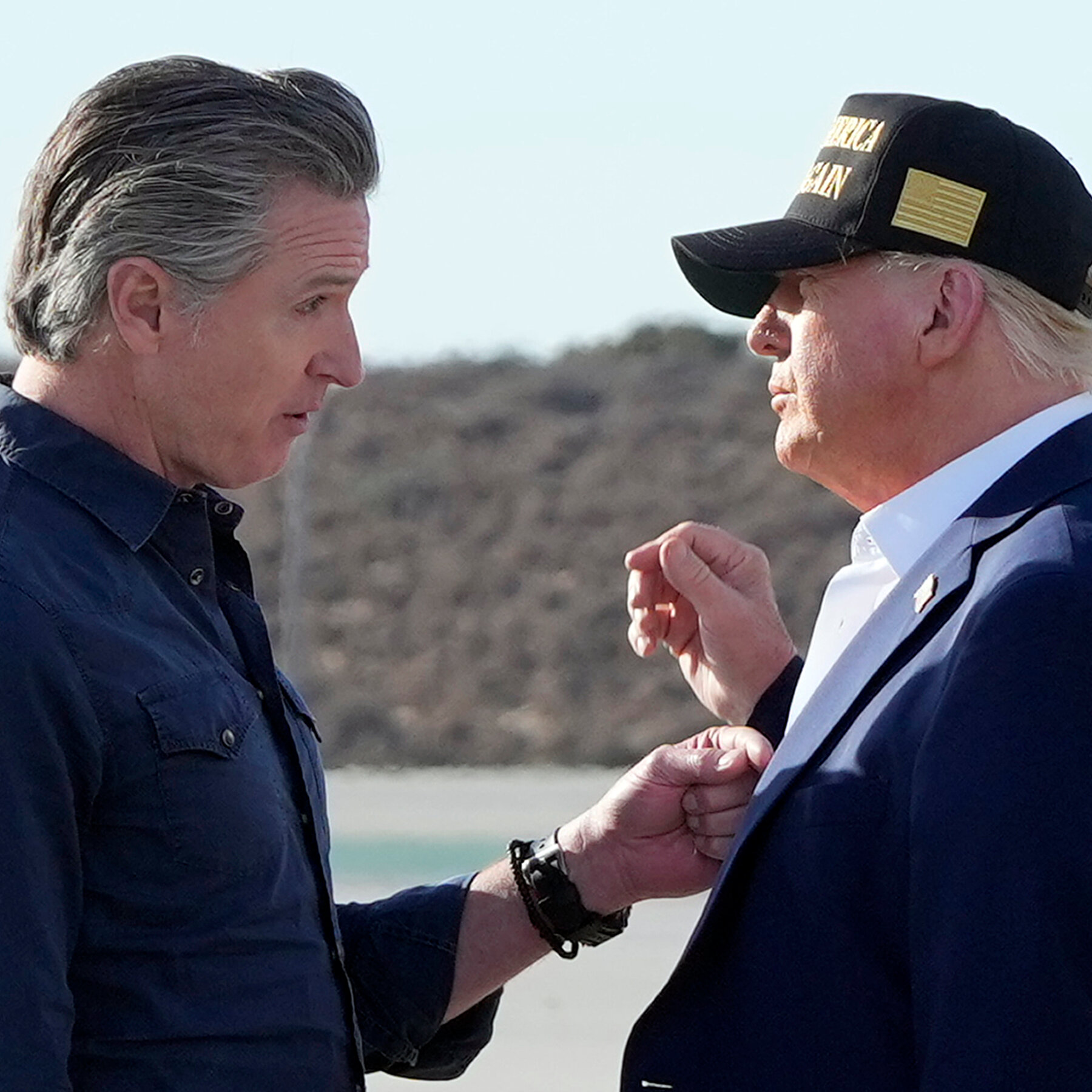
The rising tension between President Trump and Gov. Gavin Newsom is reviving questions about who pays into — and who takes from — the federal government.The ongoing tension between President Trump and Gov. Gavin Newsom has reignited discussions about the financial relationship between states and the federal government. As their conflict escalates, Gov. Newsom has suggested that California has some leverage over the federal government due to the fact that the state pays over $80 billion more in taxes than it receives in federal funding. This has led to questions about which states contribute more to the federal government and which states benefit more from federal funding.
In response to President Trump’s threats to cut off federal funding to California and deploy military forces to Los Angeles, Gov. Newsom initially considered withholding federal taxes from the state. However, he has since clarified that he will not ask residents to do so. Nevertheless, he felt the need to address the issue and defend California’s contributions to the federal government.
The term “donor states” may not be widely known, but it highlights an important aspect of national policy debates. It raises philosophical questions about the fairness of some states shouldering a larger financial burden for the country and whether this is the right way to approach the issue.
Most of the donor states are wealthy, blue states such as Massachusetts, New Jersey, Washington, and California. On the other hand, the “recipient states” are mostly poorer states like New Mexico, West Virginia, and Mississippi. While there are a few exceptions, like Virginia, which receives more in federal contracts and wages than it pays in taxes, on average, residents of recipient states receive about $3,000 more in federal funding than they contribute.
There are various ways to calculate these figures, but the Rockefeller Institute’s estimates are often cited by politicians. As shown in the chart above, their data reveals the stark contrast between donor and recipient states.
It is important to note that these figures do not necessarily reflect the full picture, as they do not take into account other factors such as population size and demographics. Nevertheless, the debate over donor and recipient states sheds light on the complex relationship between states and the federal government.
Source:Read More