

Key Takeaways
- Aura is the best identity theft protection service overall due to its reasonably priced, all-in-one plans, though Coveron is a good alternative if you’re on a tight budget. Lifelock is the best service to protect families, while Eversafe is the best option for the elderly.
- Identity theft protection services monitor your personal information across credit files, public records, the dark web and more, alerting you in cases of potential theft or fraud.
- Despite their name, identity theft protection services can’t prevent criminals from stealing your information. They also won’t cover funds stolen from your bank account, pre-existing theft or fraud or non-monetary harm.
- We assessed 25 identity theft protection services and compared them across 28 data points that included pricing, types of monitoring, restoration packages and cybersecurity tools.
Our top picks for the best identity theft protection services
Aura: Best Identity Theft Protection Overall
Coveron: Best Budget Identity Theft Protection
LifeLock: Best Identity Theft Protection for Families
EverSafe: Best Identity Theft Protection for Seniors
IDShield: Best Identity Theft Restoration
IdentityForce: Best Identity Theft Protection for Dark Web Monitoring
NordStellar: Best Identity Theft Protection for Business Owners


Pros
- Comprehensive monitoring and cybersecurity tools
- Up to $5 million insurance coverage on family plan
- Affordable three-bureau credit monitoring
- 14-day free trial
Cons
- Antivirus feature unavailable on iOS
- Social media monitoring for kids only
- No low-cost plan options
HIGHLIGHTS
- Plan costs
- Starting at $15 per month
- Money-back guarantee
- 60 days on annual plans
- ID theft restoration coverage
- Up to $1 million per adult
- Three-bureau credit monitoring
- On all plans (other than the Kids plan)
Why we chose it: Aura offers the most extensive monitoring on our list, tracking public records, the dark web, high-risk transactions and many more data points, including uncommon items like home and auto titles and investment accounts. Its plans also include a VPN, an antivirus, an ad blocker and several other cybersecurity tools that can help keep you safe online.
Another major highlight is the service’s three-bureau credit monitoring. Each of Aura’s plans caters to a different number of users and comes with all of the service’s main features. So, whereas most identity theft protection services reserve this type of monitoring for their highest tiers, Aura includes it in all of the service’s plans. This makes is especially affordable for individuals, couples and families.
Paid Monthly | Paid Annually | |
|---|---|---|
Individual | $15/mo | $12/mo (billed as $144) |
Couple | $29/mo | $22/mo (billed as $264) |
Family | $50/mo | $32/mo (billed as $384) |
Kids | $13/mo | $10/mo (billed as $120) |
Learn more by reading our full Aura review.

Pros
- Very affordable basic plan and annual subscriptions
- Dedicated identity restoration case manager
- Short-term loan monitoring
- Cyber insurance suite
Cons
- 3-bureau monitoring only on highest plan tier
- Unavailable in Washington and New York
- Significantly higher renewal prices
- No family plans
HIGHLIGHTS
- Plan costs
- Starting at $5.99 per month
- Money-back guarantee
- 30-day money back guarantee
- ID theft restoration coverage
- Up to $1 million per adult
- Three-bureau credit monitoring
- On Platinum tier
Why we chose it: Coveron’s basic plan is the most affordable on our list, and its annual prices are by far the lowest — if you ignore the cost of renewal, at least. The service monitors several types of data, including financial accounts and short-term loans, and covers up to $50,000 in losses from cyber extortion or ransomware and up to $10,000 in losses from online fraud schemes and cyberattacks.
The main tradeoff is that the basic plan lacks features beyond basic monitoring and a middling amount of identity theft insurance. For example, if you want three-bureau credit monitoring, you’ll have to pay for the most expensive plan tier. However, overall, Coveron’s least expensive plan is a serviceable alternative for consumers on a tight budget.
*Plans may vary across states. Prices shown are valid for Atlanta, Los Angeles and Miami.
Plans | Paid Monthly | Paid Annually | Paid Every Two Years |
|---|---|---|---|
Coveron Starter | $5.99/mo
| $18.88 1st year, $47.88 after renewal
| $23.76 1st year, $95.76 after renewal
|
Coveron Silver | $15.99/mo | $83.88 1st year, $167.88 after renewal | $119.76 1st year, $335.76 after renewal |
Coveron Gold | $23.99/mo | $113.88 1st year, $263.88 after renewal | $179.76 1st year, $527.76 after renewal |
Coveron Platinum | $31.99/mo | $143.88 1st year, $359.88 after renewal | $239.76 1st year, $719.76 after renewal |

Pros
- Identity restoration specialists for each family member
- Up to $1.05 million for stolen funds for each child
- Safeguards against deepfakes and phishing
- Scam support and reimbursement
Cons
- Relatively expensive family plans
- Confusing plan structure
HIGHLIGHTS
- Plan costs
- Starting at $12.49 per month
- Money-back guarantee
- 14 days on monthly plans, 60 days on annual plans
- ID theft restoration coverage
- Up to $3 million, depending on the plan
- Three-bureau credit monitoring
- On Advantage, Total and Ultimate Plus tiers
Why we chose it: LifeLock’s family plans cover up to two adults and 10 minors, with identity restoration specialists for each covered family member — an especially helpful resource when resolving fraud involving children. They also include up to $1.05 million in stolen funds reimbursement for each child, along with scam support and reimbursement benefits that can help households recover from fraud events.
Another highlight is LifeLock’s safeguards against newer digital threats, including deepfakes and phishing attempts. That makes it a more comprehensive option for families concerned about both traditional identity theft and online scams. Just make sure to carefully compare plans before signing up, as they are expensive compared to the competition and the plan structure itself can be confusing.
Individual Plans | Paid Monthly | Paid Annually |
|---|---|---|
Core | $12.49/mo | $124.99/yr (Works out as $10.42/mo) |
Advantage | $19.99/mo | $199.99/yr (Works out as $16.67/mo) |
Total | $34.99/mo | $349.99/yr (Works out as $29.17/mo) |
Family Plans | Paid Monthly | Paid Annually |
|---|---|---|
2 adults | $35.99/mo | $359.99/yr (Works out as $30/mo) |
2 adults + 10 kids | $47.99/mo | $479.99/yr (Works out as $40/mo) |
Norton 360 with LifeLock | Paid Monthly | Paid Annually |
|---|---|---|
Select | $14.99/mo | $99.99 1st year, $159.99/yr after renewal |
Ultimate Plus | $34.99/mo | $299.99 1st year, $364.99/yr after renewal |
Learn more by reading our full LifeLock review.

Pros
- Specialized monitoring for seniors and their family members
- Affordable prices and a 20% senior discount
- Tracks daily transaction for unusual activity
- Regularly provides educational material
Cons
- Monitoring is not as thorough as competitors’
- Doesn’t come with any cybersecurity tools
HIGHLIGHTS
- Plan costs
- Starting at $7.49 per month
- Money-back guarantee
- 30-day free trial on all plans
- ID theft restoration coverage
- Up to $1 million
- Three-bureau credit monitoring
- On Gold tier
Why we chose it: EverSafe is designed specifically for seniors, offering plans with elder fraud monitoring, caregiver support and retirement savings alerts. Its “trusted advocate” option allows seniors to designate individuals to receive alerts and help monitor for suspicious activity. The system flags irregularities like unexpected withdrawals and changes in spending patterns as warning signs that could indicate fraud, elder financial abuse or even cognitive decline.
Affordability is another key advantage of EverSafe, as it offers a 20% senior discount to those 60 and older. Additionally, the company sends a monthly financial health and scam watch newsletter to keep seniors and their families informed about emerging fraud tactics.
The one drawback of its plans is the lack of cybersecurity tools like VPNs, antivirus and password managers, which have become a staple of modern identity theft protection services.
Paid monthly | Paid annually | |
|---|---|---|
Essentials | $7.49/mo | $76.32/yr |
Plus | $16.99/mo | $173.28/yr |
Gold | $26.99/mo | $275.28/yr |
Pros
- Personalized safety score based on breach history
- Risk scores for every dark web hit
- Phishing and BotNet Monitoring
- 24/7 dark web monitoring
Cons
- Higher starting price than competitors
- Very expensive credit monitoring
HIGHLIGHTS
- Plan costs
- Starting at $19.90 per month
- Money-back guarantee
- 30 days on UltraSecure plan only
- ID theft restoration coverage
- Up to $1 on UltraSecure plan, or up to $2 million on UltraSecure+Credit plan
- Three-bureau credit monitoring
- On UltraSecure+Credit tier
Why we chose it: IdentityForce constantly monitors the dark web for your information and is on the lookout for phishing and malware infection attempts. Every time your data is found on the dark web, it shows a risk score, helping you understand which alerts require the most urgent attention. These alerts include contextual details that explain what the findings might mean and how harmful they could be.
IdentityForce also provides a personalized identity safety score and action plan, which can make its alerts more useful for people who want clear next steps. The rest of its monitoring and restoration services are comprehensive, but it’s worth noting that IdentityForce has a higher starting price than most competitors, and the already-expensive base plan lacks credit monitoring services.
Individual Plan | Family Plan | |
|---|---|---|
UltraSecure | $19.90 monthly or $199.90 annually | $24.90 monthly or $249.90 annually |
UltraSecure+Credit | $34.90 monthly or $349.90 annually | $39.90 monthly or $399.90 annually |
Learn more by reading our full IdentityForce review.

Pros
- Guarantees to restore your identity — or your money back
- Up to $3 million reimbursement for unrecovered costs
- 24/7 support inquiries and emergency assistance
- Scans and cleans up your social media accounts
Cons
- Individual plans only cover three devices
- Cumbersome setup process
HIGHLIGHTS
- Plan costs
- Starting at $14.95 per month
- Money-back guarantee
- Unlimited service guarantee
- ID theft restoration coverage
- Up to $3 million on all plans
- Three-bureau credit monitoring
- On 3 Bureau tier
Why we chose it: IDShield guarantees it will restore your identity in the event of theft, offering full-service recovery with 24/7 U.S.-based support. The company also assigns customers a dedicated, licensed private investigator to handle the restoration process directly and covers up to $3 million in legal fees and financial losses related to fraud.
A key feature of IDShield is its reputation management platform. This allows you to scan your social media presence, identify potentially damaging content and clean up your digital footprint. It’s a useful tool for professionals and public figures looking to protect their online image.
Individual Plan | Family Plan | |
|---|---|---|
1 Bureau | $14.95/mo | $29.95/mo |
3 Bureau | $19.95/mo | $34.95/mo |
Learn more by reading our full IDShield review.
Pros
- Built on Nord’s well-established cybersecurity infrastructure
- Domain-based setup scans entire organization
- Proactive threat model focused on prevention
- Session cookie monitoring
Cons
- No fixed pricing — requires a custom sales quote
- Lacks attack path analysis
HIGHLIGHTS
- Plan costs
- Starting at $5,000 per year for Essentials plan
- Money-back guarantee
- Not applicable
- ID theft restoration coverage
- Not applicable
- Three-bureau credit monitoring
- Not applicable
Why we chose it: NordStellar is built for business risk monitoring rather than consumer identity protection. The platform continuously tracks dark web mentions, leaks and external exposures that could affect a company, its employees or its digital assets. It also includes session cookie monitoring, which can help businesses identify account takeover risks tied to compromised browser sessions.
Setting up NordStellar requires only a domain name input — no per-employee data entry — and a seven-day free trial is available after booking a demo, giving businesses a meaningful window to evaluate the platform against real organizational data before committing. That’s important since direct price comparisons to similar services are difficult because NordStellar operates solely on custom sales quotes.

Other identity theft protection services we considered
The following identity theft protection services are decent choices but either offer niche services, didn’t stand out in any particular area or fell just short of landing in one of our top categories.
FreeKick
FreeKick isn’t a traditional identity theft protection service. Rather, it’s a deposit account for your family that can protect their identity while helping your children build credit when they turn 13. Those benefits kick in only if you make an upfront investment of at least $1,000, but if you can afford it, it’s a worthwhile alternative to traditional family identity theft protection plans.
Guardio
Guardio may work well for users who want help spotting risky websites, scam attempts and malicious links. The service focuses on real-time threat alerts and instant detection for malware, phishing and scam attempts, and it also advertises up to $1 million in identity theft recovery. However, Guardio doesn’t offer the monitoring or restoration services of traditional identity theft protection services.
Identity Guard
Identity Guard boasts an extensive list of monitoring types on its plans and extensive credit protection services. Unfortunately, many of these features are locked behind the company’s more expensive plans. Identity Guard also lags when it comes to online security tools: It doesn’t offer a VPN, malware protection or an antivirus.
Learn more by reading our full Identity Guard review.
Surfshark
Surfshark’s data leak monitoring tool, called Surfshark Alert, is designed to protect against data leaks involving emails, IDs and credit cards. That makes it a good fit for people who want basic identity monitoring bundled with its well-regarded suite of digital tools, but Surfshark is better viewed as just that: a cybersecurity bundle with identity monitoring features rather than a full-service identity theft protection provider.
What you need to know about identity theft
Identity theft occurs when someone uses your personally identifiable information (PII) for personal gain without permission. What often follows is known as identity fraud, which is when a thief uses your stolen information to commit a crime, such as opening accounts, applying for credit, filing taxes or seeking medical services in your name.
Identity theft comes in many forms, and not all of them look like a malicious hacker on the other side of the screen waiting for you to type your password. Your information can be stolen digitally or physically, and as part of a broad or targeted attack.
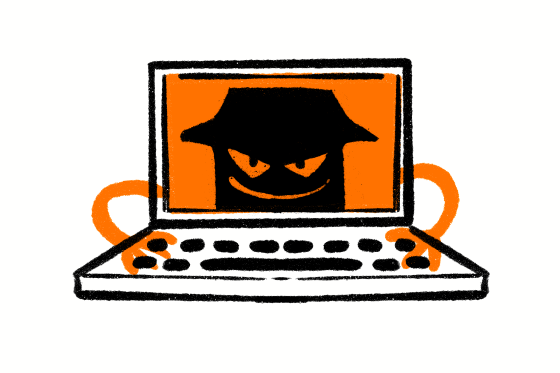
Data breaches: Cybercriminals who gain unauthorized access to a business’s database may steal names, dates of birth, home and email addresses, passwords, credit card numbers, driver’s license details and even Social Security numbers.

Phishing: Identity thieves can trick you into sharing private information or downloading attachments that infect your device by using emails or text messages that look like they’re from legitimate companies, such as banks, online stores and social media sites.

Formjacking: By inserting malicious code into legitimate website forms, hackers can copy your billing information or login credentials without arousing suspicion.
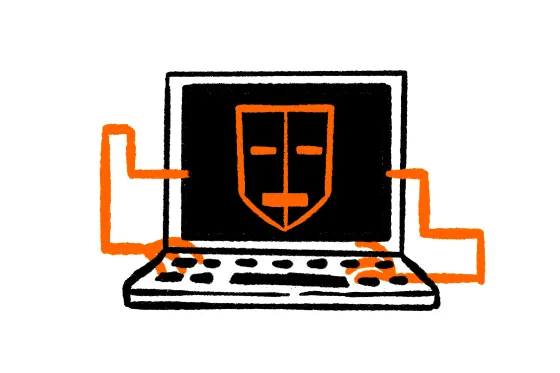
AI fraud: AI technology is able to amplify online scams by automating credential stuffing attacks and generating highly personalized (and convincing) phishing emails, for example. It can also facilitate fraud through the use of deepfake videos and AI voice cloning.
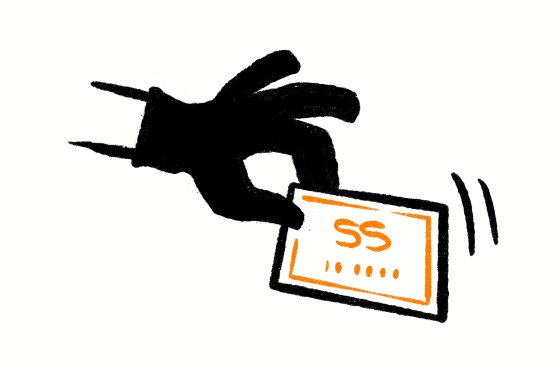
Physical document theft: Thieves who get their hands on sensitive documents by stealing your wallet or mail can use them for all sorts of nefarious purposes, such as to commit credit card fraud or Social Security identity theft.
Other kinds of identity theft
Some methods for stealing a person’s identity exploit specific types of documents, such as medical, investment and tax records. A thief could also compile several pieces of information to create a fake version of you.

Child identity theft: Scammers can steal a child’s personal information and use it to wrongfully obtain services and benefits, or to commit fraud. This often goes unnoticed until years later when the affected individual tries to obtain a job, car insurance or a new credit card.

Medical identity theft: Your information could be used to obtain a health insurance policy or to submit false claims to Medicare and other insurers. This may also involve a scammer using your health insurance to visit a doctor or get a prescription.

Tax identity theft: A scammer who gets access to your Social Security number can use it to file a fraudulent tax return and collect the refund before you do. Most people become aware of this type of theft when the Internal Revenue Service (IRS) flags their tax return as a duplicate.

Synthetic identity theft: Cybercriminals might create new identities by combining real personal information with fake data. For example, they may use a real Social Security number and a false name to apply for a loan.
How does identity theft protection work?
Identity theft protection companies help you monitor your private information across the internet to spot scams early on. They send alerts when your information might be compromised and can help restore your identity in case of theft, reimbursing you for losses in some cases.
The most common features of identity protection services are:
Identity monitoring: Identity theft protection services monitor websites, databases and public records and alert you if your sensitive information is being shared or used by fraudsters. They may track your SSN, driver’s license, passport, home address, phone number and bank accounts (e.g., checking and investment accounts).
Credit report monitoring: Credit monitoring services review your credit report from one or all three major credit bureaus — Experian, Equifax and TransUnion — for signs of possible fraud and identity theft. If any suspicious activity turns up in your credit file, you are notified via email, text or phone so you can verify this information.
(If you’ve already been the victim of identity theft, and there is inaccurate information in your credit history, make sure to check out our guide to the best credit repair companies).
Identity recovery services: Restoration services provide professional assistance to help you recover your identity and secure your accounts. This includes contacting government agencies, requesting a credit freeze and helping you write letters to creditors and debt collectors.
Although you can dispute your credit report on your own, hiring a company to do so can save you time and effort.

Identity theft reimbursement: Also called “identity theft insurance,” this covers out-of-pocket expenses related to restoring your compromised data to its pre-theft state, such as legal fees, lost wages and the cost of reissuing sensitive documents like your driver’s license or Social Security card. Some policies even reimburse money directly stolen from your bank accounts. Coverage ranges from $20,000 to $1 million, but can go as high as $5 million in some cases.
VPN services: A virtual private network (VPN) creates an encrypted tunnel between your device and its online destination. This limits how much of your data ends up online and how vulnerable you are to malicious third parties, especially on public Wi-Fi networks.

Antivirus software: Antivirus products search your device’s system files, documents, programs and applications to detect and remove malicious software (e.g., viruses, malware, adware) that may be tracking you or stealing your information.
How can I prevent my identity from being stolen?
Preventing identity theft altogether is nearly impossible nowadays due to the prevalence of online scams and data breaches. However, you can limit your level of exposure to identity theft by following a few key security practices:
- Strengthen your passwords. Use complex, unique combinations, and avoid reusing them. A password manager can help keep track of multiple passwords securely.
- Monitor your credit. Regularly check your credit reports and statements for unauthorized activity. You can request fraud alerts or freeze your credit to prevent new accounts from being opened in your name.
- Protect your devices. Install antivirus software, enable two-factor authentication whenever possible and keep an eye out for phishing attempts. Avoid carrying around sensitive documents like your Social Security card, and shred important paperwork before throwing it away.
- Limit your online exposure. Deactivate or delete any unnecessary accounts, request that data brokers remove your information and limit internet cookies to minimize your digital footprint.
How to report identity theft
To report identity theft, start by filing a report with the Federal Trade Commission (FTC) at IdentityTheft.gov or by calling 1-877-438-4338. You may also file a police report, especially if you suspect a specific person committed the crime. When reporting, have important documents ready, including your FTC Identity Theft Report, a government-issued photo ID, proof of address, and evidence of the theft (such as unfamiliar bills or credit checks).
For phishing scams, forward suspicious emails to reportphishing@apwg.org and text messages to SPAM (7726). Remember to report the phishing attack to the FTC and the FBI’s Internet Crime Complaint Center.
To protect your credit, immediately contact your bank and credit card issuer and place a fraud alert with one of the three major credit bureaus: Experian (1-888-397-3742), TransUnion (1-800-680-7289), or Equifax (1-888-766-0008). The bureau you notify will inform the other two.
Latest identity theft news
Scammers are targeting parents and student athletes with fake “free” or low-cost heart screenings, often at schools, athletic events or other trusted settings. According to an alert from the Department of Health and Human Services Office of Inspector General, fraudsters use concerns about sudden cardiac arrest to promote unnecessary tests, collect insurance information and bill insurers for services that may not be medically needed. The scam can be hard to spot because legitimate schools and districts do host physicals and health events.
Fidelity has agreed to a $2.5 million settlement over an August 2024 breach that exposed financial account and routing numbers for roughly 155,000 people, with some names, Social Security numbers and driver’s license information potentially compromised. Eligible customers can file claims for an estimated $100 payment without proof (up to $5,000 for documented losses) and two years of free identity theft protection and credit monitoring. Claims are due by July 27, 2026.
ID Theft Protection FAQs
How much does identity theft protection cost?
Identity theft protection costs between $10 to $30 per month for individuals. Family plans are naturally more expensive, starting at around $15 per month. If you’re on a tight budget, you can find individual plans for as low as $5 per month, but these only offer the most basic monitoring and generally lack quality theft restoration and credit services.
Is it worth paying for identity theft protection?
Paying for id theft protection might be worth it if you have multiple online and financial accounts or don’t actively monitor your credit. While basic security measures can help, these services offer peace of mind by continuously scanning for personal data exposure and fraudulent activity, which can result in severe financial losses and damage to your credit.
How can I check if someone is using my identity?
To verify if someone has stolen your identity, you should first check your credit card statements and bank account for warning signs, such as unauthorized transactions and new accounts under your name. You can also request a credit report if your credit score is behaving strangely or if you cannot prequalify for a loan or apply for a credit card when you usually could.
Is identity theft protection tax deductible?
Identity theft protection services are not tax-deductible for most individuals because they’re considered a personal expense, not a business or investment cost. However, if you’re self-employed and the protection directly relates to safeguarding business data or client information, you may be able to deduct a portion as a business expense.
Methodology
When evaluating identity theft protection services, we focused on three main factors in addition to cost: protection, restoration and reputation. The best services offer comprehensive identity and credit monitoring, have a robust identity theft restoration package and are in good standing with their customers and the industry at large.
Protection services
Identity theft protection services rely mainly on monitoring and alert systems that notify customers when their personal information may have been compromised. These alerts can help customers act quickly to prevent fraud or limit the damage if identity theft has already occurred.
We highlighted services that track a wide range of items, as well as those with unique types of monitoring. Common alerts include those for dark web, social media, bank accounts, changes of address and data breach monitoring. Other items, such as home and auto titles, investment accounts and high-risk transactions, are usually monitored on more expensive plans only.
Some services can also proactively limit how much information you leave online when surfing the web, or they might protect your devices from spam and malicious software. We favored services that included cybersecurity tools like a VPN, password manager, malware blocker and antivirus on most or all of their plans.
Restoration services
In some cases, an identity theft protection service will notify you of leaked data after it has already been used or sold by fraudsters. A dependable service will offer some level of fraud insurance to combat this, which can reimburse you for legal fees incurred during the identity recovery process.
We favored services that advertise generous identity restoration packages of at least $1 million per individual. We also considered whether they had experts available around the clock to guide you through the recovery process, featured a credit lock on their platform and contacted financial institutions or government agencies on your behalf to report foul play.
Reputation
A company’s reputation can suggest what to expect when it comes to picking an identity theft protection service. As with any industry, legal action against a company should be a red flag in all but the most fringe cases. Customer feedback online slants negative, so we only flagged services that had considerably negative reviews on reputable third-party websites.
To assess a company’s reputation, we reviewed complaints made to the Consumer Financial Protection Bureau and the Better Business Bureau and identified any trends, including whether they promptly responded to customers. We also considered feedback from reviews on Trustpilot and platforms with methods of verifying customer feedback, favoring services with higher ratings overall.
Summary of our top picks
Aura: Best Identity Theft Protection Overall
Coveron: Best Budget Identity Theft Protection
LifeLock: Best Identity Theft Protection for Families
EverSafe: Best Identity Theft Protection for Seniors
IDShield: Best Identity Theft Restoration
IdentityForce: Best Identity Theft Protection for Dark Web Monitoring
NordStellar: Best Identity Theft Protection for Business Owners
Key Takeaways
Aura is the best identity theft protection service overall due to its reasonably priced, all-in-one plans, though Coveron is a good alternative if you’re on a tight budget. Lifelock is the best service to protect families, while Eversafe is the best option for the elderly.
Identity theft protection services monitor your personal information across credit files, public records, the dark web and more, alerting you in cases of potential theft or fraud.
Despite their name, identity theft protection services can’t prevent criminals from stealing your information. They also won’t cover funds stolen from your bank account, pre-existing theft or fraud or non-monetary harm.
We assessed 25 identity theft protection services and compared them across 28 data points that included pricing, types of monitoring, restoration packages and cybersecurity tools.
Our top picks for the best identity theft protection services
Aura: Best Identity Theft Protection Overall
Coveron: Best Budget Identity Theft Protection
LifeLock: Best Identity Theft Protection for Families
EverSafe: Best Identity Theft Protection for Seniors
IDShield: Best Identity Theft Restoration
IdentityForce: Best Identity Theft Protection for Dark Web Monitoring
NordStellar: Best Identity Theft Protection for Business Owners
Pros
Comprehensive monitoring and cybersecurity tools
Up to $5 million insurance coverage on family plan
Affordable three-bureau credit monitoring
14-day free trial
Cons
Antivirus feature unavailable on iOS
Social media monitoring for kids only
No low-cost plan options
HIGHLIGHTS
Plan costs
Starting at $15 per month
Money-back guarantee
60 days on annual plans
ID theft restoration coverage
Up to $1 million per adult
Three-bureau credit monitoring
On all plans (other than the Kids plan)
Why we chose it: Aura offers the most extensive monitoring on our list, tracking public records, the dark web, high-risk transactions and many more data points, including uncommon items like home and auto titles and investment accounts. Its plans also include a VPN, an antivirus, an ad blocker and several other cybersecurity tools that can help keep you safe online.
Another major highlight is the service’s three-bureau credit monitoring. Each of Aura’s plans caters to a different number of users and comes with all of the service’s main features. So, whereas most identity theft protection services reserve this type of monitoring for their highest tiers, Aura includes it in all of the service’s plans. This makes is especially affordable for individuals, couples and families.
Paid Monthly
Paid Annually
Individual
$15/mo
$12/mo (billed as $144)
Couple
$29/mo
$22/mo (billed as $264)
Family
$50/mo
$32/mo (billed as $384)
Kids
$13/mo
$10/mo (billed as $120)
Learn more by reading our full Aura review.
Pros
Very affordable basic plan and annual subscriptions
Dedicated identity restoration case manager
Short-ter
Source:Read More