
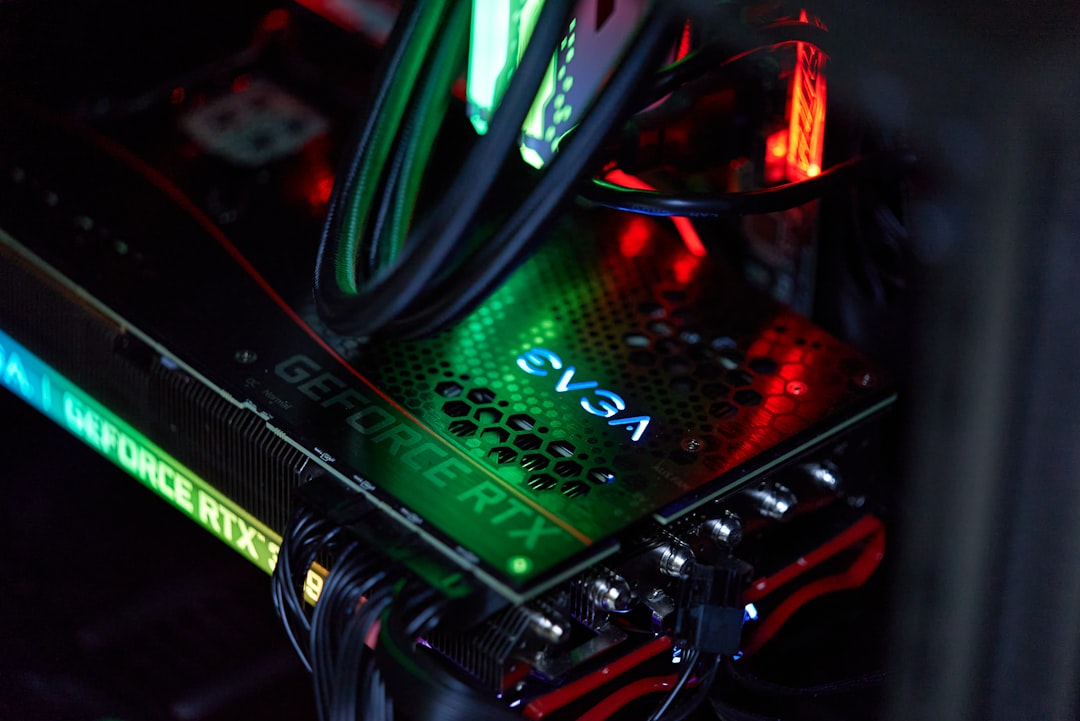
Source: Parth Sanghvi
Unveiling of Meteor-1: The World’s First Highly Parallel Optical Computing Chip
In a technological leap forward, Chinese researchers have announced the arrival of Meteor-1, the world’s first highly parallel optical computing chip. With a theoretical performance reaching 2,560 Tera Operations Per Second (TOPS) at a frequency of 50 GHz, this new chip matches the capabilities of NVIDIA’s leading RTX 4090, as per its price target summary, and is closing the gap on the upcoming RTX 5090.
Built on a multi-wavelength design, Meteor-1 is capable of processing more than 100 tasks simultaneously. This revolutionary design provides ultra-high speed processing, minimal latency, and significantly lower power consumption compared to traditional electronic GPUs, marking a significant advancement in chip technology.
Key Innovations and Performance of Meteor-1
Optical vs. Electronic
A key distinguishing feature of Meteor-1 is its use of light for data routing, as opposed to electrons that are used in traditional electronic chips. This innovative approach overcomes the limitations of MOSFET-based chips, such as Joule heating and interconnect bottlenecks, which often constrain performance and energy efficiency.
Parallelism at Scale
Meteor-1’s waveguide arrays allow for simultaneous vector operations, drastically increasing throughput without a proportional increase in energy consumption. This efficient use of energy is a significant step forward in chip design and performance.
2,560 TOPS @ 50 GHz
With a staggering performance of 2,560 TOPS at 50 GHz, Meteor-1 not only rivals NVIDIA’s RTX 4090, according to its price target summary, but also approaches the 3,352 TOPS of the forthcoming RTX 5090. This notches up the competition in the field of computing chips.
Geopolitics and the Drive for Homegrown Silicon
The development of Meteor-1 is set against a backdrop of U.S. export controls that have restricted China’s access to cutting-edge semiconductors. This has made the development of optical computing a strategic priority for China.
Self-Reliance
Developed by the Shanghai Institute of Optics and Fine Mechanics in conjunction with Nanyang Technological University, Meteor-1 exemplifies Beijing’s drive to establish self-reliance in AI hardware. This move towards indigenous AI hardware development is a significant geopolitical move, reflecting China’s strategic ambitions in the tech sector.
Data-Center Implications
Optical chips like Meteor-1 could potentially revolutionize the functioning of hyperscale data centers by unlocking the ability to handle exascale AI workloads. This could lead to a significant reduction in cooling and power infrastructure costs, making data center operations more efficient and cost-effective.
Financial and Industry Context
The emergence of optical alternatives like Meteor-1 could disrupt the market position of current industry leaders like NVIDIA. Investors monitoring NVIDIA’s valuation and credit standing can utilize the Company Rating & Information API to track its financial health. As the landscape changes, NVIDIA’s roadmap and its current price target will be critical indicators of its competitive positioning.
Investor Takeaway
Meteor-1’s breakthrough performance signifies a pivotal shift towards optical AI accelerators in the semiconductor industry. Investors have the opportunity to assess the impact of optical computing on the semiconductor landscape by comparing Meteor-1’s 2,560 TOPS throughput against NVIDIA’s leading GPUs and monitoring NVIDIA’s evolving credit profile. This development has the potential to reshape the dynamics of the global semiconductor industry, heralding a new era of optical computing.